Rule conversion_velocity, read from the engine code
Conversion fraud caught by sales speed
Conversion fraud often arrives as a flood: scripted checkouts piling sales onto one affiliate. When an affiliate has 30 or more commissions credited within one hour, the engine holds each new sale until you look.
By the AffiliateTracking teamUpdated 4 min read


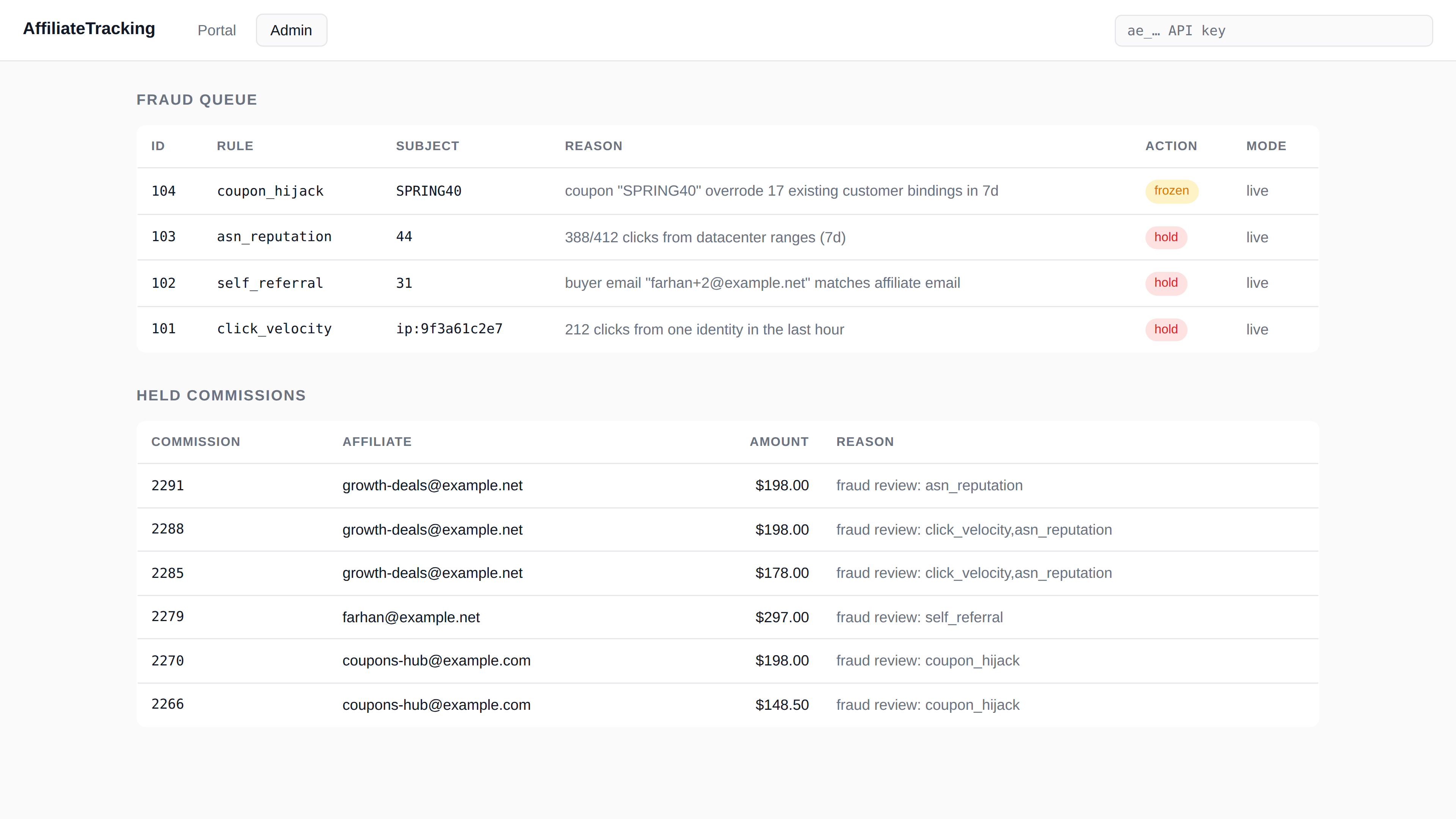
The fraud queue in the product, running on demo data.
The short answer
The rule counts the affiliate's commissions created in the hour before the sale, this sale included. At 30, it holds the sale. The engine holds every further sale while the count stays at 30 or more.
How the rule works
Read from internal/fraud/engine.go. The code fixes the thresholds. No setting changes them.
- 01Commissions, not clicks
The count is commissions in the ledger. A sale has to exist before it counts, so the rule watches the money path directly.
- 02A rolling hour
The window is the 60 minutes before each sale. It doesn't reset on the hour.
- 03Sale 30 onward
The first 29 sales in the hour pay as normal. Sale 30 and the ones after it wait for you.
The exact logic
// internal/fraud/engine.go, ConversionVelocity (condensed)
SELECT COUNT(*) FROM commissions
 WHERE affiliate_id = <affiliate> AND created_at > now - 1 hour
if n >= 30 { hold(commission) }
Condensed from the Go source in v0.5.0 (main 4f87f77). Comments are ours.
The signals
- 30 or more commissions in 1 hour
- Per affiliate
- Each sale from the 30th held
Our data
We ran the rule at its threshold
We ran 2 fixtures through the real engine on 3 Oct 2026: 1 below the line, 1 at or past it. These are the results and the engine's own words.
| Fixture | Result | The engine's reason |
|---|---|---|
| 29 commissions in the last hour | Silent | No verdict |
| 30 commissions in the last hour | Fired | 30 sales credited within one hour |
Method: one Go test against engine v0.5.0 (main 4f87f77), a new SQLite database per fixture, dry run so nothing was held. Re-run with go test ./internal/fraud/ plus the fixture list above.
What lands in your queue
When conversion velocity fires, the verdict shows the rule, who it's about and what it saw. Release or uphold is your call, not the engine's.
| Partner | What it saw | Commission | Result |
|---|---|---|---|
| Affiliate 44 | 34 sales credited within one hour | $412.80 | Commission held |
heldWaits for youThe commission stays out of payouts until you decide.releasedPaid normallyIt goes into the next payout.upheldNot paidThe engine cancels it and takes the money back. Already paid? Use a refund.In the wild
Scripts and farms produce volume, fast.
- Case: Michael Smith's bots streamed AI-made songs billions of times before his guilty plea in Mar 2026. Source: Decrypt, 20 Mar 2026.
- Case: In Jun 2017, Thai police arrested three men running a click farm with 474 iPhones and 347,200 SIM cards. Source: Infosecurity Magazine, 15 Jun 2017.
Each item re-read against its linked source on . Items we couldn't verify were cut.
Limits, and how attackers try to beat it
- A real launch can trip it. A newsletter or a flash sale can bring 30 sales in an hour. Release them in one pass.
- 29 sales an hour every hour stays under the line. Other rules have to catch that pace.
Spacing checkouts out keeps each hour under 30, but scripts tend to run when nobody watches. The share of sales between midnight and 6am UTC catches that schedule. Bought checkouts from abroad leave sales from countries with no clicks.
Related rules
Thresholds checked against the code on . Windows roll with each sale.
Conversion velocity questions
Is it per program or per affiliate?
Per affiliate, across all their programs. The count doesn't look at the campaign.
Do earlier sales in the hour get held?
No. Only the sale being screened is held. The first 29 stay as they were.
When does the rule run?
On every credited sale, in the same database transaction as the credit. A sweep every 5 minutes also re-checks affiliates active in the last hour.
What does a hold cost me?
Nothing but time. A held commission stays out of payouts. Release it and it pays in the next payout. Uphold it and the engine cancels it and takes the money back.
Can I test it without holding anything?
Yes. Set AE_FRAUD_DRYRUN=1. The engine records each verdict and holds nothing.